
From Root to Leaves
The whole plant as a world of possibilities
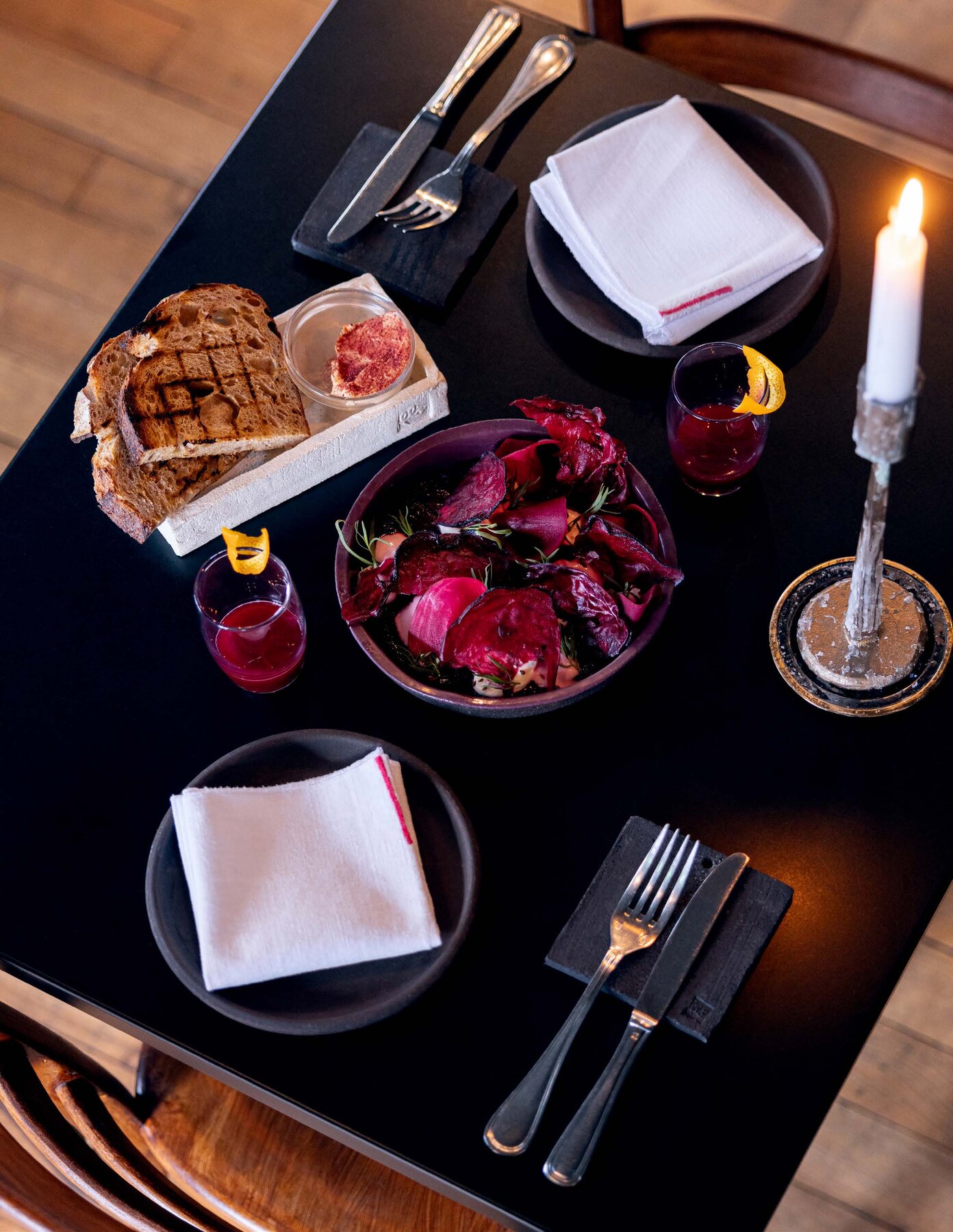
From Root to Leaves is Lorenzo’s research and educational project dedicated to the use of plants in their entirety.
The project explores roots, stems, leaves, flowers, fruits and seeds as parts of a connected living organism, each carrying different culinary, nutritional and cultural possibilities.
Industrial food systems often train consumers to recognise only a limited part of a plant as valuable. Leaves, stalks, peels and roots may disappear before reaching the market or be discarded automatically during preparation.
From Root to Leaves challenges this fragmented perception.
The project does not assume that every part of every plant is edible. Plants contain complex chemical systems, and some tissues may be toxic, indigestible or unsuitable for human consumption. A responsible root-to-leaf practice therefore depends on botanical knowledge, accurate identification, technical competence and an understanding of appropriate preparation methods.
Research is the foundation of the project.
Through empirical observation, scientific knowledge and the study of traditional food practices, Lorenzo investigates how a broader range of plant parts can be prepared, preserved and transformed.
Fermentation, cooking, dehydration, extraction and other techniques can reveal flavours and textures that would otherwise remain inaccessible. A part commonly treated as secondary may become a broth, seasoning, fermented product, sauce or central element of a dish.
This approach also encourages a closer relationship with the landscape. It asks where a plant was cultivated, how it was harvested and what ecological or social system supported its growth.
Whenever possible, the project prioritises ingredients connected to the place in which the experience takes place. Cultivated and wild plants become a way of reading a territory: its seasons, biodiversity, agricultural history and communities.
From Root to Leaves can be developed as a workshop, conference, research residency, pop-up dinner, temporary restaurant or training programme for professional kitchens.
It may also become a collaborative platform bringing together chefs, botanists, farmers, foragers, researchers and cultural institutions.
In every form, the project seeks to replace the idea of vegetable “waste” with a more nuanced understanding of potential, responsibility and limits.
Using a plant more completely is not only a technical exercise. It is an act of attention toward the living system that produced it.
Keep exploring